
Creative Yoga Games for Kids
Keeping children active is essential for their physical and emotional wellbeing. Developing an active lifestyle early on makes it easier for kids to carry these healthy habits into adulthood. In a time when physical activity continues to decrease and rates of anxiety, depression, and obesity rise, it’s more important than ever to help little ones begin their wellness journey early. One of the best ways to support this journey is through Yoga designed specifically for children.
Understanding Yoga for Kids
Yoga contains eight limbs, or areas, of practice. The most recognized in the UK is the third limb, Asana—the physical expression of Yoga. Asana includes all physical poses and postures commonly seen in studio or gym classes. Although it’s only one limb, its impact on health and wellness is enormous.
This benefit applies to students of all ages. Children, like adults, need ways to stay active and healthy. For kids, motivation increases when activities are fun, engaging, and playful. Many children show their need for movement through high-energy behaviours. While these behaviours can be labelled as “problems,” they often express unmet needs rather than true behavioural issues. Kids need breaks, movement, and opportunities to express themselves.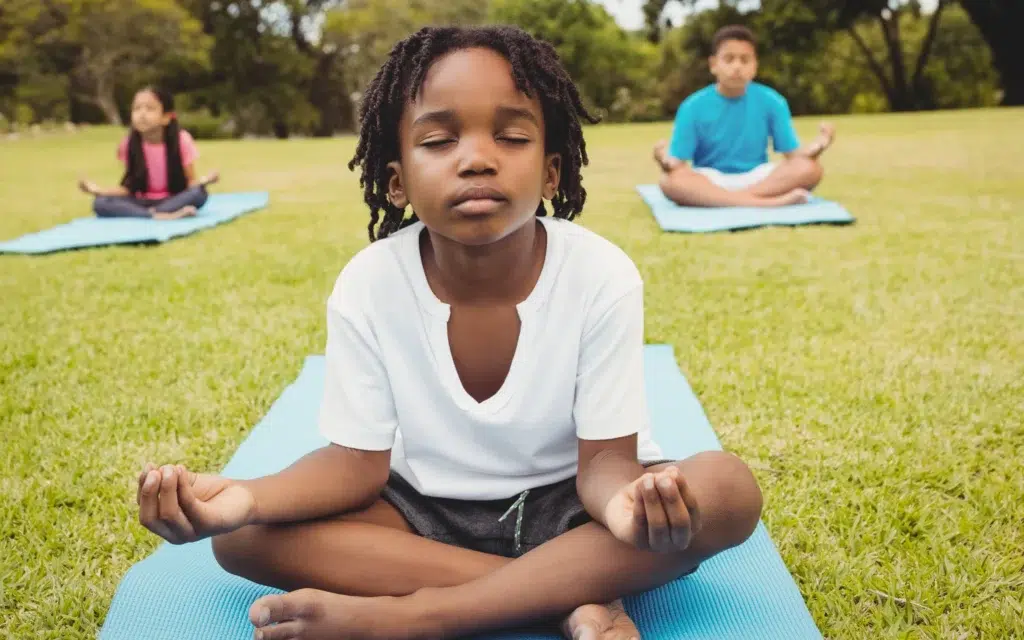
Across the UK, many schools now include “movement brain breaks,” giving students a chance to release energy and reset. Yoga games are frequently used in these breaks to make mindful movement fun and accessible.
How Yoga Helps Kids Thrive
Yoga supports children’s physical and emotional wellbeing in several ways.
Creates a Calm Environment
Yoga naturally sets a peaceful tone. Lowering the lights and adding soothing music can help reduce overstimulation and ease anxiety. After stretching and quiet time, many children feel more grounded and ready for the day.
Promotes Healthy Breathing
Pranayama, the fourth limb of Yoga, focuses on mindful breathing. Deep breathing helps hyperactive or anxious children relax and regulate their senses. It also supports digestion and improves mental clarity by increasing blood circulation.
Builds Routine and Structure
Asana practice follows consistent routines and repetitive movements. This structure helps kids stay engaged without becoming overwhelmed. Over time, routine improves focus, planning skills, and emotional regulation.
Boosts Confidence
When children learn new poses and improve their balance, flexibility, and strength, they feel more confident in their bodies. Yoga encourages self-love and celebrates progress over perfection. It’s a journey of discovering the wholeness already within them.
Preparing Kids for Yoga Games
Before playing Yoga games, it helps to establish clear expectations. Setting simple rules creates structure and gives kids the confidence to join in without worry.
A Foundation of Yoga Rules That Keeps Class Fun
-
Demonstrate poses first, then let children copy you. This keeps their attention focused and improves safety.
-
Allow animal noises at appropriate times, but remind kids to maintain indoor voices to stay “in control.”
-
Encourage everyone to respect personal space and avoid touching others unless the game requires it.
-
Remind kids to use their eyes to watch and their ears to listen.
These rules help create a calm learning environment so everyone can enjoy Yoga without stress.
Yoga Games for Kids
The Yoga Statue Game
This quiet game helps children review 10–20 Yoga poses and allows you to observe how well they remember them.
Goal: Be the last one standing.
How to Play
-
Place mats in a circle.
-
Have all players stand in Mountain Pose.
-
Choose one child to be the monitor. They stand in the centre and slowly turn in circles.
-
Players around the circle move silently from pose to pose without being caught moving.
-
The last person standing becomes the next monitor.
Rules
-
The monitor must keep turning.
-
No arguing with the monitor’s decisions.
-
If you’re seen moving or lose balance, you’re out.
Cotton Ball Races
This fun, fast-paced activity teaches breath control, patience, and coordination.
Goal: Use only your breath to move a cotton ball across the finish line.
How to Play
-
Set up two mats side by side with small “bumps” for obstacles.
-
Place a finish line 4 feet away using a mat or string.
-
Two competitors blow their cotton balls across the mat and over the bumps.
-
Winners from each round compete until one champion remains.
Rule
-
Breath only—no hands allowed.
Partner Pose Creation Challenge
This creative game works well for older Yoga students who know a variety of poses.
Goal: Create the most imaginative combined pose using two Yoga pose cards.
How to Play
-
Provide each student with a pose card.
-
Pair students and give each pair space to work.
-
Set a one-minute timer.
-
The pair that combines both poses most creatively wins.
Rules
-
Partners must stay connected in some way.
-
No one may hold a partner fully off the ground.
-
Both poses must be recognisable in the final creation.
Yoga Red Light, Green Light
This game works well with any group size and is perfect for all ages.
Goal: Reach the finish line first by moving through Yoga poses during green and yellow lights.
How to Play
-
Choose one person as the Yogi Master to call the lights and judge the game.
-
Participants start at a wall, facing the finish line.
-
When the Yogi Master calls “Green Light,” everyone moves forward in a pose.
-
Continue until someone reaches the finish line and becomes the next Yogi Master.
Rules
-
Move only during green or yellow lights.
-
During yellow lights, move in slow motion.
-
If you move on red or fall, you’re out.
-
No walking or running.
-
No arguing with the Yogi Master.
Final Thoughts
Yoga keeps kids active, regulated, confident, and connected to themselves. These playful Yoga games make it easy to bring movement, mindfulness, and fun into homes and classrooms. I hope you and your children enjoy these activities! Feel free to reach out or share your favourite Yoga games—we’d love to hear from you.